
Where is the Vehicle Paint Code Written? Guide to Finding Paint Codes by Brand and Model
When a vehicle needs touch-up paint, spray paint, local refinishing or complete panel painting, one of the most important pieces of information is the vehicle paint code.
Knowing that a car is white, black, grey or red is usually not enough. Vehicle manufacturers may offer several very similar colors with different formulas and paint codes.
For this reason, identifying the factory paint code is an important step when selecting the correct automotive paint.
The exact location of the paint label can vary according to the vehicle manufacturer, model and production year.
On some vehicles, the code is found around the driver-side door. On others, it may be located in the engine compartment, trunk or spare wheel area.
This guide explains what a vehicle paint code is, where it can be found and which areas of the vehicle should be checked.
What Is a Vehicle Paint Code?
A vehicle paint code is a combination of letters, numbers or both that identifies a specific factory exterior color.
It provides a technical color reference rather than only a general color description.
For example, a manufacturer may offer several white colors such as:
Solid white
Pearl white
Ice white
Metallic white
Cream white
Each version may use a different paint formula.
The same is true for grey, blue, red and many other automotive colors.
Why Is the Car Paint Code Important?
The correct paint code helps identify a more accurate automotive color formula.
This becomes especially important for:
Touch-up repairs
Stone chip repairs
Scratch repairs
Door refinishing
Fender painting
Bumper repairs
Local refinishing
Automotive spray paint
Replacement panel painting
Professional body repairs
Even a small mismatch can become visible when a localized repair is performed.
Where Is the Car Paint Code Located?
Common vehicle paint code locations include:
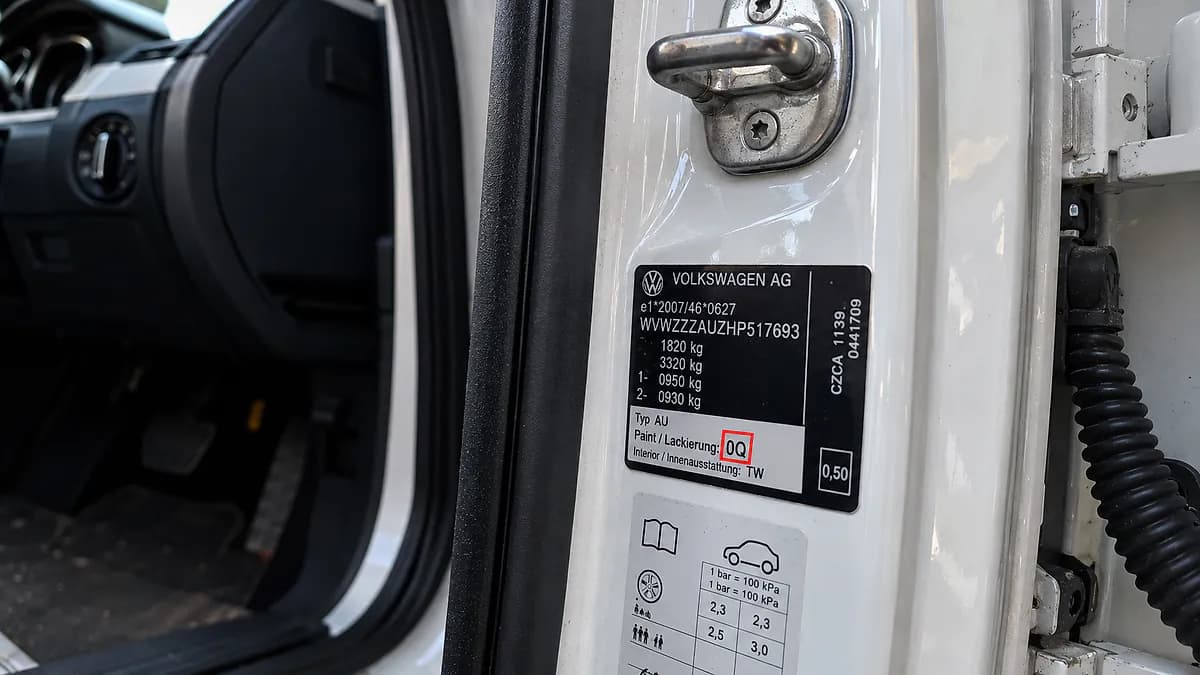
Driver-side door
Door jamb
Passenger door area
Engine compartment
Under the hood
Trunk
Spare wheel area
Trunk floor
Glove box
Manufacturer identification label
Service booklet
Maintenance documentation
Not every vehicle will use all of these locations.
Driver-Side Door Paint Code
The driver-side door area is one of the most common locations for modern vehicles.
When opening the door, check:
Door jamb
Door edge
B-pillar
Manufacturer label
The paint code may be identified using terms such as:
Paint
Paint Code
Color
Colour
Color Code
Exterior Color
In some cases, the code appears without a clear label.
Engine Bay Paint Code
Some manufacturers place the paint code inside the engine compartment.
Possible locations include:
Suspension towers
Front panel
Firewall
Inner fenders
Manufacturer plate
The label may also contain VIN information and production details.
Trunk Paint Code
Some vehicles have their color code inside the trunk area.
Check:
Inside the trunk lid
Side panels
Spare wheel compartment
Under the trunk floor
Manufacturer labels
Older vehicles may use trunk-based identification labels more frequently.
Spare Wheel Area
The spare wheel compartment is another possible location.
The label may contain:
Production codes
Option codes
Trim codes
Paint code
Interior code
Lifting the trunk floor may be required to access the label.
Can the Paint Code Be in the Glove Box?
Yes, some vehicles may have an option or production label inside the glove box.
However, not every code on this label is a paint code.
Manufacturer-specific information may be needed to identify the correct value.
What Does a Vehicle Paint Label Look Like?
A vehicle identification label may include:
VIN
Manufacturer
Model code
Engine code
Transmission code
Exterior paint code
Interior trim code
Production date
Paint codes are usually short.
Possible formats may look like:
123
A12
1G3
ABC
LC9X
These are only examples of possible code structures.
Is a Paint Code the Same as a Color Name?
No.
A color name is a general description, while the paint code identifies the technical color reference.
A manufacturer may offer multiple metallic grey colors under similar marketing names.
Each can use a different paint code.
Does Paint Code Location Change by Brand and Model?
Yes.
The location can change depending on:
Manufacturer
Model
Production year
Body style
Even different models from the same manufacturer may place the label in different areas.
Can You Find a Paint Code from the VIN?
The Vehicle Identification Number, or VIN, identifies a specific vehicle.
Manufacturer and service databases may use the VIN to retrieve production information, including the original exterior color in some cases.
However, the paint code should not automatically be assumed to be directly readable from the VIN characters.
The VIN and paint code are separate pieces of information.
Can You Find a Paint Code from a License Plate?
A registration plate does not directly contain a paint code.
Some databases may retrieve vehicle information using a registration number, but the plate itself is not the technical color reference.
Checking the manufacturer label remains one of the most direct methods.
Is the Paint Code Written on the Registration Document?
Vehicle registration documents often include a general color description such as:
White
Black
Grey
Red
Blue
However, the technical factory paint code is generally not listed.
The registration color alone is therefore not sufficient for precise automotive paint selection.
What Should You Do After Finding the Paint Code?
After locating the code:
Confirm the vehicle manufacturer.
Confirm the model.
Check the production year.
Record the paint code carefully.
Verify the corresponding paint formula.
Select the correct paint product.
Determine the repair area.
Pay close attention to similar characters such as zero and the letter O.
What Do the Letters and Numbers Mean?
Paint code structures vary between manufacturers.
Some use only numbers, while others use letters and numbers.
There is no universal coding system.
For this reason, the meaning of a paint code depends on the vehicle manufacturer.
Can the Same Paint Code Look Different?
Yes.
Vehicles with the same factory paint code may show small visual differences due to:
Production batches
Paint supplier variations
Vehicle age
UV exposure
Previous repairs
Clear coat aging
Polishing history
Professional color matching may therefore be useful in addition to the factory code.
Is the Paint Code Enough for a Faded Vehicle?
The paint code remains the main factory reference.
However, an older vehicle that has been exposed to sunlight for many years may no longer visually match the original factory color perfectly.
Professional refinishing may require color adjustment or blending.
Do You Need the Paint Code for Touch-Up Paint?
Yes.
The correct code becomes particularly important for small localized repairs because even a slight color difference may be noticeable.
Useful information for touch-up paint selection includes:
Make
Model
Year
General color
Paint code
Do You Need a Paint Code for Automotive Spray Paint?
If the spray paint is intended to match the vehicle's original body color, the paint code should be used whenever possible.
General-purpose spray paint and vehicle-specific automotive paint are not the same product type.
Can You Identify a Paint Code from a Photograph?
A photograph alone is generally not reliable enough for exact color identification.
Color appearance can change because of:
Camera sensors
Lighting
Sunlight
Shadows
Screen settings
White balance
Image editing
A photograph can provide an approximate visual reference but should not replace the factory paint code.
What If the Paint Label Is Missing?
Older labels may become damaged, faded or removed.
Alternative methods include:
Manufacturer or Dealer Records
A service center may be able to retrieve original vehicle production information using the VIN.
Service Documentation
Some service booklets or maintenance records may contain production codes.
Professional Color Measurement
Automotive paint specialists can use color measurement equipment such as spectrophotometers to analyze the existing paint surface.
Automotive Paint Specialist Support
An experienced paint supplier may help identify the correct color or formula.
Common Mistakes When Looking for a Paint Code
Assuming Every Code Is a Paint Code
Vehicle labels can contain engine, transmission, trim and option codes.
Not every code represents the exterior color.
Confusing VIN with Paint Code
A VIN is generally a long identification number, while paint codes are usually much shorter.
Relying Only on Registration Color
A general registration color does not identify the exact factory formula.
Selecting Paint Only by Vehicle Model
One model may be available in many different colors.
The model name alone is not enough for accurate paint selection.
Frequently Asked Questions
Is the car paint code on the door?
Many vehicles place the code near the driver-side door or door jamb, but the location depends on the manufacturer.
How many characters does a paint code have?
There is no standard length. Codes may contain two, three, four or more characters.
Can a paint code contain only numbers?
Yes. Some manufacturers use numbers only, while others use combinations of letters and numbers.
Is the paint code on the registration document?
The registration document usually includes a general vehicle color but not the technical factory paint code.
Can a paint code be found from the license plate?
A license plate does not directly contain a paint code, although some systems may use registration information to retrieve vehicle data.
Can VIN identify the paint color?
Manufacturer databases may use the VIN to retrieve the original color, but the paint code is not usually directly readable from VIN characters.
What if the paint label is missing?
Dealer records, manufacturer information or professional color measurement can help identify the vehicle color.
Why can the same paint code look different?
Age, UV exposure, previous repairs, clear coat condition and application technique can all affect the appearance of automotive paint.
Conclusion
Finding the correct vehicle paint code is an important step for touch-up repairs, spray paint applications and professional automotive refinishing.
The paint code may be located around the driver-side door, engine compartment, trunk, spare wheel area or manufacturer identification label.
Its exact position varies by make, model and production year.
Rather than selecting paint only by visual appearance or a general color name, checking the original factory paint code provides a more reliable reference.
When the label cannot be found, manufacturer records, service systems or professional color measurement may help determine the correct automotive color.