
What Is Touch-Up Paint? How to Repair Car Scratches and Stone Chips
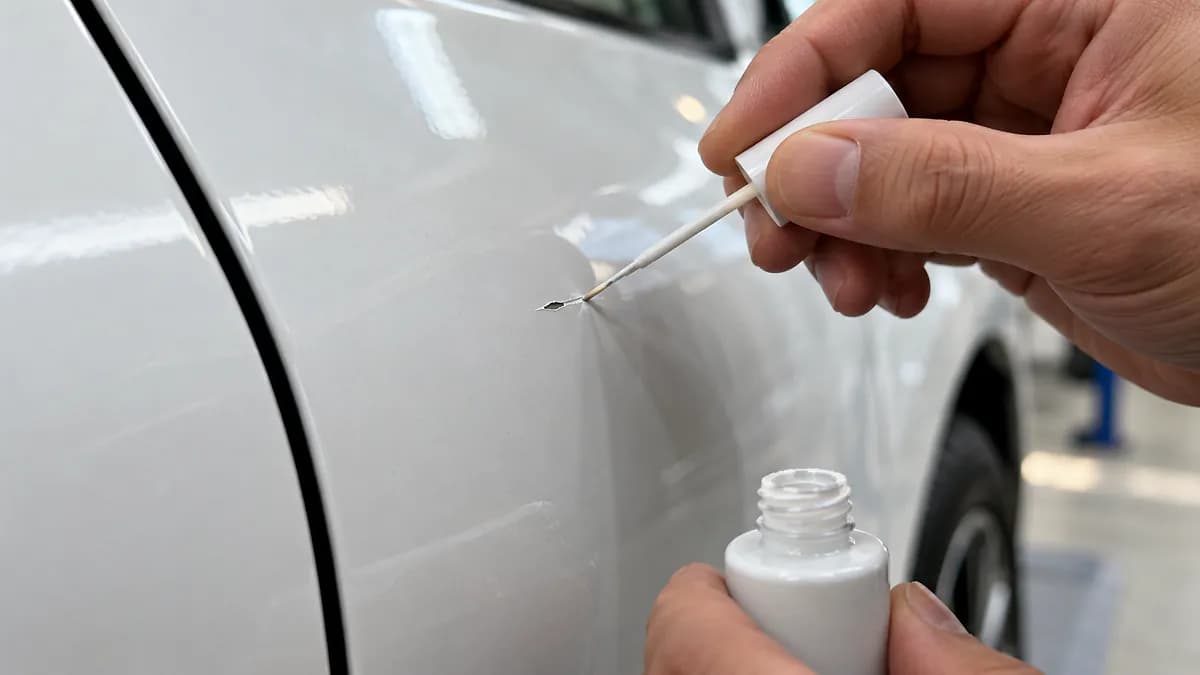
Small scratches, stone chips and localized paint damage are common problems on vehicle bodywork.
A complete body panel does not always need to be repainted because of a small defect. When the damage is limited in size, automotive touch-up paint can provide a more controlled repair method.
Touch-up paint is commonly used on small damaged areas around doors, hoods, fenders, bumpers and other painted exterior surfaces.
However, successful touch-up repair requires more than simply applying any similar-looking paint.
The correct vehicle paint code, proper surface preparation and controlled application are all important.
What Is Automotive Touch-Up Paint?
Touch-up paint is an automotive coating used to repair small areas where the original vehicle paint has been scratched, chipped or removed.
It may be suitable for:
Small stone chips
Minor paint loss
Door edge damage
Local scratches
Hood chips
Fender scratches
Small bumper paint defects
Minor parking damage
The purpose is to cover the damaged area and reduce its visual appearance without refinishing an entire body panel.
What Does Touch-Up Paint Do?
Small paint defects can affect both appearance and surface protection.
If a chip exposes bare metal, environmental exposure may increase the risk of oxidation over time.
A suitable touch-up repair can help:
Cover small paint defects
Reduce the visibility of scratches
Improve the appearance of stone chips
Cover exposed substrate
Improve the overall appearance of the vehicle
Touch-up paint is not a substitute for professional body repair when damage is extensive.
Which Scratches Can Be Repaired with Touch-Up Paint?
Vehicle scratches can occur at different depths.
A typical automotive paint system may include:
Substrate
Primer
Color coat
Clear coat
The correct repair depends on which layer has been damaged.
Light Clear-Coat Scratches
If the scratch only affects the clear coat, additional paint may not be necessary.
Products such as:
Cutting compound
Polish
Scratch remover
Swirl remover
may be more appropriate.
Scratches Reaching the Color Coat
When the color layer has been damaged, touch-up paint may be suitable for small areas.
Using the correct vehicle color becomes particularly important.
Scratches Reaching Bare Metal
Deeper scratches may expose primer or bare metal.
Depending on the size of the damage, the repair may require:
Cleaning
Rust inspection
Primer
Color coat
Clear coat
Larger damaged areas should generally be evaluated by a professional.
What Is a Stone Chip?
A stone chip occurs when small stones or road debris strike the vehicle while driving.
Common areas include:
Hood
Front bumper
Front fenders
Side mirrors
Front doors
Front roof edge
Vehicles frequently driven on highways may experience more stone-chip damage.
Can Stone Chips Be Repaired with Touch-Up Paint?
Small stone chips are a common application for touch-up paint.
The area should first be cleaned and inspected.
Paint should then be applied in small controlled amounts rather than one thick drop.
Why Is the Vehicle Paint Code Important?
One of the most important factors in touch-up repair is the vehicle paint code.
Two vehicles that both appear white may actually use completely different paint formulas.
Examples can include:
Solid white
Pearl white
Metallic white
Ice white
Cream white
Using the vehicle paint code provides a much better color reference than visual estimation alone.
Where Can You Find the Paint Code?
Depending on the manufacturer, the paint code may be found:
Around the driver-side door
On the door jamb
In the engine compartment
In the trunk
Around the spare wheel
On a manufacturer identification label
How to Apply Touch-Up Paint
Inspect the Damage
Determine whether the scratch affects only the clear coat or reaches the color layer.
Clean the Surface
Remove:
Dirt
Dust
Oil
Wax
Silicone
Road contaminants
Inspect Loose Paint
Loose paint around the damaged area may need to be carefully prepared.
Check for Rust
If bare metal is exposed, inspect the area for corrosion before applying paint.
Mix the Paint
Automotive pigments can settle during storage, so the product should be properly mixed before application.
Use a Small Amount
Applying too much paint at once is one of the most common mistakes in touch-up repair.
Apply Thin Coats
Several thin layers can provide better control than one thick application.
Apply Additional Coats When Needed
Additional thin coats may be required depending on the depth of the chip and the hiding power of the paint.
Check Clear-Coat Requirements
Some automotive paint systems require a compatible clear coat over the color layer.
Can Touch-Up Paint Be Applied with a Brush?
Yes.
Depending on the product, application tools may include:
Fine brush
Cap brush
Micro applicator
Fine-tip applicator
Touch-up pen
Smaller applicators can provide better control on tiny stone chips.
What Is a Touch-Up Pen?
A touch-up pen is a small applicator designed for precise paint repairs.
It can be useful for:
Stone chips
Small scratches
Door-edge damage
The correct paint code is still important.
How Many Coats of Touch-Up Paint Are Needed?
There is no universal number of coats.
The required number depends on:
Paint opacity
Damage depth
Repair size
Color type
Application method
Several thin coats are generally easier to control than one thick layer.
How Long Does Touch-Up Paint Take to Dry?
Drying time varies according to:
Paint chemistry
Temperature
Humidity
Coat thickness
Air circulation
Always follow the technical instructions for the specific product.
Does Touch-Up Paint Need Clear Coat?
Some systems require clear coat and others do not.
Clear coat may help provide:
Gloss
Surface protection
Improved visual finish
Completion of a basecoat system
Always confirm the requirements of the paint being used.
Can You Polish After Touch-Up Paint?
Polishing may be possible after the paint has fully dried and cured.
Polishing too early can damage fresh paint.
The specified curing time should therefore be observed.
Where Can Touch-Up Paint Be Used?
Hood
Useful for small stone chips and localized paint loss.
Door Edges
Small chips caused by contact with walls or other vehicles can often be repaired.
Fenders
Localized scratches may be suitable for touch-up repair.
Bumpers
Small paint defects may be repaired, although plastic surfaces can require different preparation.
Side Mirrors
Small scratches and chips on mirror housings may also be repaired with suitable products.
Can Touch-Up Paint Be Used on Plastic Bumpers?
Yes, but surface preparation may differ from metal body panels.
If bare plastic is exposed, a suitable plastic primer or adhesion promoter may be required.
Touch-Up Paint vs Spray Paint
Touch-up paint and spray paint serve different purposes.
Touch-Up Paint
Best suited for:
Stone chips
Small scratches
Tiny localized defects
Door edge damage
Spray Paint
Better suited for:
Larger local areas
Small parts
Bumper sections
Wheels
Wider refinishing work
Will Touch-Up Paint Completely Hide a Scratch?
The result depends on the size and depth of the damage.
Touch-up paint can make small defects less visible, but it may not produce the same surface finish as professional panel refinishing.
Deep scratches, dents and large areas of paint loss may require professional repair.
Why Does Touch-Up Paint Sometimes Look Different?
Even with the correct paint code, visual differences can occur because of:
Vehicle age
UV exposure
Previous repairs
Clear-coat condition
Metallic orientation
Coat thickness
Application technique
Metallic and pearl colors can be especially sensitive.
Can Metallic Cars Use Touch-Up Paint?
Yes.
Touch-up paint can be prepared for metallic automotive colors.
However, metallic effect particles make exact visual matching more sensitive to application technique.
Can Pearl Paint Be Touched Up?
Yes, although pearl systems may involve multiple layers.
Small repairs can still be performed, but exact color matching can be more difficult than with simple solid colors.
Common Touch-Up Paint Mistakes
Using the Wrong Paint Code
Choosing paint only by color name can result in a visible mismatch.
Applying Too Much Paint
A thick drop of paint may create a raised repair.
Painting a Dirty Surface
Oil, dirt or wax can reduce adhesion.
Ignoring Drying Time
Applying coats too quickly can affect the finish.
Painting Over Rust
Rust should be treated before paint is applied.
Using Touch-Up Paint on Large Damage
Touch-up paint is designed for small areas, not large panel repairs.
Should a Scratch Be Polished or Touched Up?
This depends on scratch depth.
A light clear-coat scratch may respond to polishing.
A scratch that reaches the color layer may require paint.
A deep scratch exposing primer or metal may require more extensive preparation.
Does a Scratch That Catches Your Fingernail Need Paint?
A scratch that catches a fingernail may be deeper than a light clear-coat defect.
However, this is only a rough indication.
The affected paint layer should also be visually inspected.
What Should You Check When Buying Touch-Up Paint?
Consider:
Vehicle make
Vehicle model
Production year
Paint code
Color type
Solid or metallic finish
Paint quantity
Clear-coat requirement
Application method
25 g, 50 g and 100 g Touch-Up Paint
Different paint quantities can be selected according to the repair.
25 g Touch-Up Paint
Suitable for a few small stone chips or minor localized defects.
50 g Touch-Up Paint
Useful when several small repairs are required.
100 g Touch-Up Paint
May be preferred when multiple areas need repair or additional paint is required for future use.
Frequently Asked Questions
What is touch-up paint?
It is automotive paint used to repair small scratches, chips and localized areas of paint loss.
Does touch-up paint repair scratches?
It can help repair small scratches that reach the color layer. Clear-coat-only scratches may be better suited to polishing.
Can stone chips be repaired with touch-up paint?
Yes. Stone chips are one of the most common applications for touch-up products.
Is the paint code necessary?
Using the correct vehicle paint code is recommended for better color matching.
Does touch-up paint need clear coat?
It depends on the paint system. Some basecoat systems require a compatible clear coat.
How many coats are needed?
There is no fixed number. Several thin coats may be required depending on damage depth and paint coverage.
Can touch-up paint stop rust?
Correctly prepared and coated exposed metal can receive additional protection, but existing rust should not simply be covered with paint.
Is spray paint better than touch-up paint?
Neither is universally better. Touch-up paint is intended for small defects, while spray paint is more suitable for larger areas.
Conclusion
Automotive touch-up paint is a practical solution for small stone chips, scratches and localized paint loss.
The first step is determining how deep the damage is.
Light clear-coat scratches may only require polishing, while damage reaching the color coat may require touch-up paint.
For better results:
Identify the correct vehicle paint code.
Clean and prepare the surface.
Inspect exposed metal for corrosion.
Apply paint in thin, controlled coats.
Use clear coat when required by the paint system.
With the correct product and careful application, small paint defects can be made significantly less noticeable.