
What is Primer in Auto Paint? Which Primer to Use Where?
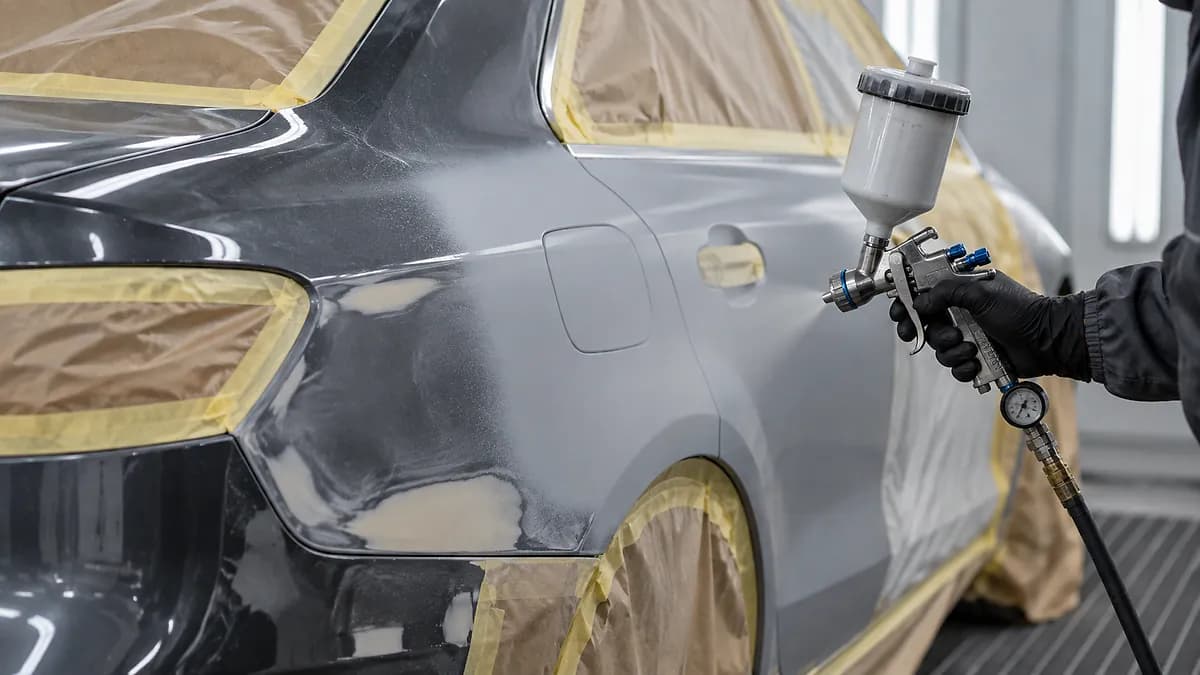
Automotive refinishing requires more than selecting the correct color. The substrate must also be properly prepared before the final paint is applied.
Automotive primer creates an intermediate layer between the surface and the paint system.
The correct primer can improve adhesion, fill minor defects, provide a uniform substrate and help protect metal surfaces.
However, the same primer should not be used on every material.
Bare metal, body filler, existing paint and plastic components can require different primer systems.
What Is Automotive Primer?
Automotive primer is a preparatory coating used before the final color coat.
Depending on the product, primer can:
Improve adhesion
Fill sanding marks
Reduce small surface defects
Control surface absorption
Protect metal
Provide a uniform base
Support coating durability
Why Is Primer Used Before Automotive Paint?
Primer may be required on:
Bare metal
Body filler
Sanded paint
Repaired panels
Welded areas
Plastic components
It creates a suitable transition between the substrate and the paint.
What Happens If Primer Is Not Used?
Possible problems include:
Poor adhesion
Peeling paint
Visible sanding marks
Uneven color
Corrosion
Poor plastic adhesion
Main Types of Automotive Primer
Common primer types include:
Acrylic primer
Cellulose primer
Epoxy primer
Filler primer
Plastic primer
1K primer
2K primer
High-build primer
Wet-on-wet primer
What Is Acrylic Primer?
Acrylic primer is widely used in automotive refinishing.
It can provide:
Good sanding properties
Surface filling
Uniform substrate
Compatibility with automotive topcoats
What Is 1K Primer?
1K primer is a single-component product.
It normally does not require a separate hardener.
It is useful for:
Small repairs
Localized work
Quick applications
What Is 2K Primer?
2K primer uses two components:
Primer
Hardener
The chemical reaction can provide stronger performance and durability.
What Does 4:1 Primer Mean?
A 4:1 ratio generally means:
Four parts primer
One part hardener
Some systems may also require thinner.
Always follow the technical data sheet.
What Is Filler Primer?
Filler primer is designed to fill small surface imperfections and sanding marks.
It is often applied over:
Body filler
Sanded surfaces
Existing paint
Repaired areas
After drying, it is sanded to create a smooth base.
What Is High-Build Primer?
High-build primer provides greater film thickness.
It is used to reduce small surface imperfections before final painting.
What Is Epoxy Primer?
Epoxy primer is commonly used on metal because it provides strong adhesion and corrosion resistance.
It may be suitable for:
Bare steel
Galvanized metal
Aluminum
Restoration work
Repaired metal panels
What Is Cellulose Primer?
Cellulose primer is a fast-drying traditional primer used for small and local automotive repairs.
It may offer:
Fast drying
Easy sanding
Simple application
Acrylic Primer vs Cellulose Primer
Cellulose primer generally dries faster.
2K acrylic primer can provide:
Higher build
Better durability
Better professional refinishing performance
What Is Plastic Primer?
Plastic primer is designed to improve paint adhesion on plastic automotive parts.
Common applications include:
Bumpers
Mirror covers
Spoilers
Plastic trims
Can Plastic Be Painted Without Primer?
Some plastics have poor paint adhesion.
The surface may require:
Cleaning
Sanding
Degreasing
Plastic primer or adhesion promoter
Paint
Which Primer Should Be Used on Bare Metal?
Depending on the coating system, bare metal may use:
Epoxy primer
Corrosion-resistant primer
Suitable 2K primer
Which Primer Is Used on Galvanized Metal?
Galvanized surfaces can require a dedicated primer or epoxy system.
Compatibility should be confirmed from the technical data sheet.
Which Primer Is Used on Aluminum?
Suitable products may include:
Epoxy primer
Etch primer
Aluminum-compatible primer
Is Primer Applied Over Body Filler?
Yes.
After body filler is shaped and sanded, primer can fill small pores and sanding marks.
Is Primer the Same as Body Filler?
No.
Body filler is used to correct larger surface defects.
Primer is used for finer surface preparation and adhesion.
What Is the Typical Paint Process?
A typical sequence may be:
Cleaning
Body repair
Body filler
Sanding
Primer
Primer sanding
Basecoat
Clear coat
Is Sanding Required Before Primer?
In many cases, yes.
The surface should be properly cleaned and prepared.
Is Primer Sanded After Application?
Filler primers are often sanded after drying to create a smooth substrate.
How Many Coats of Primer Are Needed?
The correct number depends on the product and surface condition.
Several controlled coats may be used.
Always follow the product instructions.
How Long Should You Wait Between Primer Coats?
Flash time varies by product.
Insufficient flash time can cause:
Runs
Solvent trapping
Drying problems
How Long Does Primer Take to Dry?
Drying depends on:
Primer chemistry
Temperature
Humidity
Film thickness
Airflow
When Can Paint Be Applied Over Primer?
Paint should be applied only after the primer has reached the correct drying stage and has been prepared as required.
Is Primer Mixed with Thinner?
Some products require thinner.
The amount depends on the product.
Incorrect thinning can reduce performance.
Why Is Hardener Used?
In 2K products, hardener initiates the chemical curing reaction.
This gives the coating:
Strength
Durability
Sandability
Chemical resistance
Why Is the Mixing Ratio Important?
Incorrect mixing can cause:
Slow drying
Soft film
Cracking
Poor sanding
Reduced durability
Does Primer Color Affect Final Paint?
Yes.
Primer color can affect:
Coverage
Paint consumption
Final color appearance
When Is Grey Primer Used?
Grey primer provides a neutral base for many colors.
When Is White Primer Used?
White primer can be useful under:
White
Yellow
Light red
Pastel colors
When Is Dark Primer Used?
Dark primer can be useful under:
Black
Dark grey
Dark blue
Other dark colors
Does Primer Color Affect Paint Consumption?
Yes.
A primer shade closer to the final color may reduce the number of topcoat layers required.
Can Primer Be Supplied in Aerosol Form?
Yes.
Aerosol primers are practical for small localized repairs.
Why Does Primer Run?
Common causes include:
Heavy application
Spraying too close
Excess thinner
Low air pressure
Insufficient flash time
Why Does Primer Crack?
Possible causes include:
Excessive film thickness
Incorrect hardener ratio
Incompatible coating layers
Poor curing
Applying rigid products over flexible surfaces
Why Does Primer Bubble?
Possible causes include:
Moisture
Contamination
Solvent trapping
Rust
Incompatible coating systems
What Is Guide Coat?
Guide coat is a contrasting thin layer used during sanding.
It helps identify:
Low spots
Sanding scratches
Surface irregularities
What Is Wet-on-Wet Primer?
Wet-on-wet primer is designed to receive the next paint layer without conventional sanding in certain approved systems.
It can save time in professional refinishing.
What Safety Equipment Is Required?
Automotive primers may contain hazardous chemicals.
Suitable protection may include:
Respiratory protection
Gloves
Safety glasses
Ventilation
Some 2K systems may contain isocyanates and require professional respiratory protection.
What Should Be Considered When Choosing Automotive Primer?
Consider:
Surface material
Bare metal or existing paint
Body filler
Plastic
Corrosion risk
Required build
Drying time
Sandability
1K or 2K system
Final paint compatibility
Frequently Asked Questions
What is automotive primer?
It is a preparatory coating used before automotive paint to improve adhesion and surface quality.
Is primer always necessary?
Not in every situation, but it is commonly required on bare metal, body filler, plastic and repaired areas.
Can primer be applied over body filler?
Yes. Filler primer is commonly used over properly prepared body filler.
Can paint be applied directly over primer?
Yes, after the primer has dried and been prepared according to the product system.
What is the difference between 1K and 2K primer?
1K is a single-component product. 2K uses a hardener and chemically cures.
What does 4:1 primer mean?
It generally means four parts primer to one part hardener.
Which primer is used on plastic bumpers?
Plastic primer or a suitable adhesion promoter should be used.
Which primer is used on bare metal?
Epoxy or another suitable corrosion-resistant primer may be used.
Is primer sanded?
Filler primers are typically sanded after drying.
Does primer color matter?
Yes. It can affect coverage and paint consumption.
Conclusion
Automotive primer is a critical part of a professional refinishing system.
The correct primer can:
Improve adhesion
Fill surface imperfections
Protect metal
Create a uniform base
Support coating durability
Different substrates require different solutions.
As a general guide:
Bare metal: epoxy or corrosion-resistant primer
Body filler: filler primer
Plastic: plastic primer
Small local repairs: 1K primer
Professional body repair: 2K acrylic primer
Always verify the technical data sheet, mixing ratio and substrate compatibility before application.