
What Is Automotive Body Filler? Differences Between Polyester, Galvanized and Fine Filler
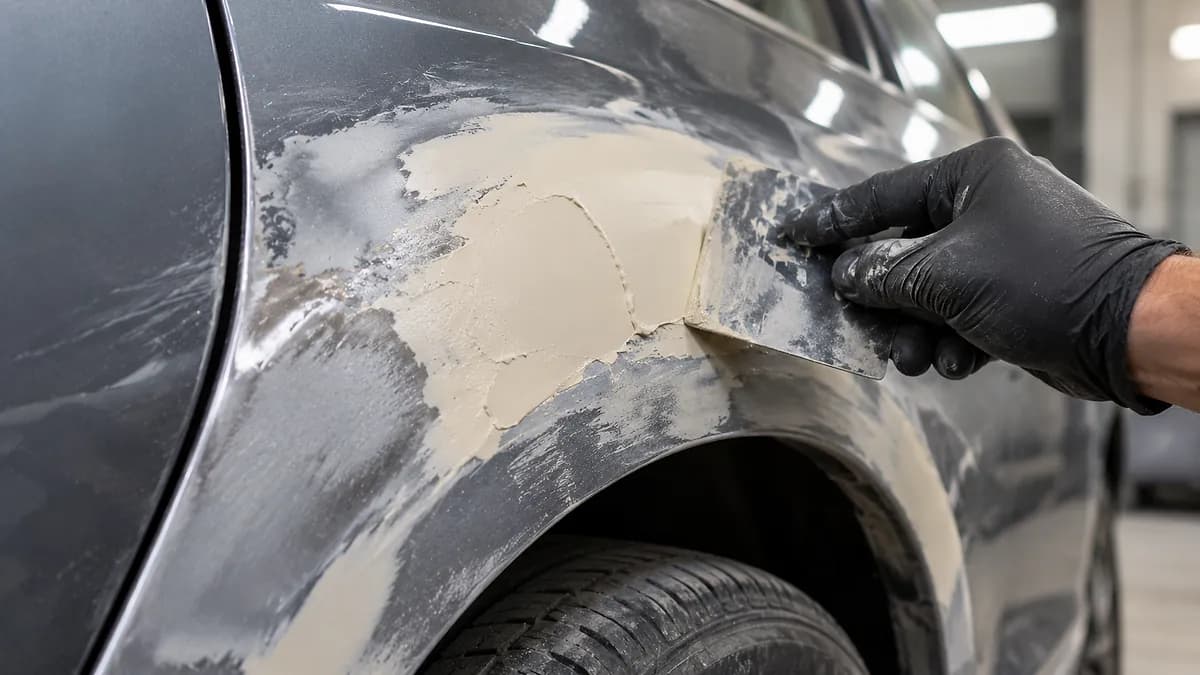
Automotive body repair requires more than primer and paint. Dents, low spots, weld marks and surface irregularities must be corrected before refinishing.
One of the most important products used during this stage is automotive body filler.
Body filler is used to level damaged areas and create a smoother surface before primer and paint.
However, different filler types are designed for different surfaces and repair requirements.
Common examples include polyester filler, galvanized filler and fine finishing filler.
What Is Automotive Body Filler?
Automotive body filler is a repair material used to fill dents, low spots, scratches and surface irregularities on vehicle body panels.
Its main purpose is to restore the shape of the panel before primer and paint.
Body filler can help:
Fill minor dents
Correct low spots
Smooth weld areas
Reduce surface irregularities
Prepare panels for primer
What Is Polyester Body Filler?
Polyester body filler is one of the most commonly used automotive fillers.
It is usually a two-component system:
Polyester filler
Hardener
After mixing, a chemical curing reaction begins.
Common advantages include:
Good filling ability
Easy shaping
Sandability
Fast curing
Where Is Polyester Filler Used?
It may be used on:
Steel body panels
Repaired dents
Welded areas
Doors
Fenders
Hoods
Trunk lids
Surface compatibility should always be confirmed.
What Is Galvanized Body Filler?
Galvanized body filler is designed to provide improved adhesion on galvanized and zinc-coated metal surfaces.
Many modern vehicles use galvanized sheet metal for corrosion resistance.
Using filler specifically compatible with galvanized steel can improve adhesion.
Where Is Galvanized Filler Used?
Typical applications include:
Galvanized body panels
Zinc-coated steel
Modern vehicle body structures
Corrosion-resistant panels
Polyester Filler vs Galvanized Filler
The main difference is substrate compatibility.
Polyester Filler
General body repair
Strong filling performance
Easy shaping
Common on standard metal panels
Galvanized Filler
Better suited to galvanized surfaces
Improved adhesion on zinc-coated panels
Useful for modern body panels
What Is Fine Body Filler?
Fine filler or finishing putty is used for minor surface imperfections after the main filling work is complete.
It is suitable for:
Pinholes
Fine scratches
Minor sanding marks
Small surface defects
When Is Fine Filler Used?
A typical process may be:
Repair the panel
Apply polyester filler
Sand the filler
Apply fine filler
Sand again
Apply primer
This creates a smoother final surface.
Heavy Filler vs Fine Filler
Heavy filler provides more build and is used for deeper low spots.
Fine filler is designed for final surface refinement.
What Is Fiber Filler?
Fiber filler contains reinforcing fibers.
It may provide increased strength for:
Deeper repairs
Welded areas
Structural reinforcement zones
A finer finishing filler may still be required afterward.
What Is Aluminum Filler?
Aluminum-filled body filler contains metallic filler particles.
It may provide:
Higher heat resistance
Stronger surface
Improved performance on some metal panels
What Is Plastic Body Filler?
Plastic vehicle parts require flexible repair materials.
Standard rigid polyester filler may crack when applied to flexible plastic.
Special plastic fillers can be used on:
Bumpers
Plastic trims
Flexible body parts
What Is Body Filler Hardener?
Most polyester fillers use a separate hardener.
When filler and hardener are mixed, curing begins.
The material must be applied during its working time.
What Is the Correct Hardener Ratio?
The correct ratio depends on the product.
Too much hardener can cause:
Very fast curing
Cracking
Color change
Difficult application
Too little hardener can cause:
Slow curing
Soft filler
Sanding problems
Always follow the technical data sheet.
How Is Body Filler Mixed?
A basic process includes:
Place the required amount of filler on a clean board
Add the correct amount of hardener
Fold and mix using a spreader
Continue until the color is uniform
Avoid mixing excessive air into the material.
How Is Automotive Filler Applied?
Repair the Panel First
Large dents should first be mechanically corrected.
Sand the Surface
Remove rust, loose paint and contamination.
Clean the Surface
Remove dust, grease and silicone.
Mix the Filler
Use the correct hardener ratio.
Apply Controlled Layers
Avoid applying excessive thickness in one pass.
Allow It to Cure
Do not sand before the material has sufficiently hardened.
Sand to Shape
Restore the panel profile.
Apply Additional Filler If Required
A second coat may be used if low areas remain.
How Thick Should Body Filler Be Applied?
The recommended maximum thickness depends on the product.
Excessively thick filler can increase the risk of:
Cracking
Shrinkage
Poor curing
Excessive weight
Large dents should be repaired in the metal first.
Can Filler Be Applied Over Filler?
Yes, provided the previous layer has cured and has been properly sanded.
Can Filler Be Applied Directly Over Paint?
The surface must be properly prepared.
Glossy paint should be sanded to create mechanical adhesion.
Compatibility depends on the specific product.
Can Body Filler Be Applied to Bare Metal?
Many polyester fillers can be applied to properly prepared bare steel.
However, galvanized steel, aluminum and special alloys may require dedicated products or primer systems.
Can Filler Be Applied Over Rust?
No.
Rust should be removed completely before filler is applied.
Covering corrosion with filler only hides the problem temporarily.
How Is Body Filler Sanded?
After curing, filler is shaped using progressively finer abrasives.
The purpose is to:
Restore panel shape
Smooth transitions
Reduce scratches
Prepare for primer
What Sandpaper Grit Is Used for Body Filler?
A typical progression may include:
P80
P120
P180
P240
The exact sequence depends on the repair system.
Should Body Filler Be Wet Sanded?
Polyester filler is generally dry sanded.
Some fillers can absorb moisture, so wet sanding may not be recommended.
Should a Sanding Block Be Used?
Yes.
A sanding block helps create a straighter panel.
Sanding only with fingers can produce waves and uneven surfaces.
What Is Guide Coat?
Guide coat is a contrasting layer used to reveal:
Low spots
High spots
Sanding scratches
It helps technicians evaluate the panel during sanding.
Is Primer Applied Over Body Filler?
Yes.
After filler is sanded, a filler primer is generally applied.
Primer helps:
Seal pinholes
Reduce sanding marks
Create a uniform surface
Prepare the panel for paint
Body Filler vs Primer
Body filler corrects larger surface defects.
Primer handles smaller surface imperfections and prepares the panel for paint.
How Long Does Body Filler Take to Cure?
Curing depends on:
Hardener ratio
Temperature
Filler thickness
Product chemistry
Always follow the manufacturer instructions.
Why Does Body Filler Cure Slowly?
Possible causes include:
Too little hardener
Low temperature
Old product
Incorrect mixing
Why Does Body Filler Cure Too Quickly?
Possible causes include:
Too much hardener
High temperature
Mixing too large a batch
Why Does Body Filler Crack?
Common reasons include:
Excessive thickness
Poor surface preparation
Wrong filler for a flexible substrate
Incorrect hardener ratio
Rust underneath
Why Does Body Filler Shrink?
Shrinkage can occur when:
Filler is too thick
The material is not fully cured
Paint is applied too early
The mix ratio is incorrect
Why Does Body Filler Lift?
Adhesion problems can be caused by:
Grease
Dirt
Glossy unsanded paint
Rust
Incorrect filler type
Why Do Pinholes Appear?
Pinholes may be caused by:
Air trapped during mixing
Aggressive mixing
Thick application
Fast curing
Fine filler can be used to correct small pinholes.
Can Body Filler Be Used on Plastic Bumpers?
Yes, but a flexible filler specifically designed for plastic should be used.
Rigid polyester filler may crack as the bumper flexes.
Can Doors Be Repaired with Body Filler?
Yes.
Small low spots can be filled after the panel has been mechanically corrected.
Large door surfaces require careful block sanding to avoid waves.
Can Fenders Be Filled?
Yes.
Fenders are common areas for body filler repair.
Curved surfaces require careful shaping.
Can Hoods Be Filled?
Yes, but filler should be kept as thin as possible because hoods are large panels exposed to vibration and heat.
Why Can Filler Edges Show Through Paint?
Possible causes include:
Poor feather edging
Insufficient primer
Shrinkage
Surface absorption differences
Which Primer Is Used After Body Filler?
A high-build or 2K acrylic filler primer is commonly used.
The exact product should match the refinishing system.
Typical Repair Sequence After Filler
A common workflow is:
Panel repair
Surface sanding
Body filler
Filler sanding
Fine filler
Fine sanding
Filler primer
Primer sanding
Basecoat
Clear coat
Polishing if required
Common Body Filler Mistakes
Too Much Hardener
Can cause rapid curing and cracking.
Applying Over Rust
Corrosion continues underneath.
Applying Too Thickly
Increases the risk of cracking and shrinkage.
Applying to Glossy Paint
Reduces adhesion.
Poor Mixing
Some areas may remain soft.
Sanding Too Early
The filler may tear or clog the abrasive.
Sanding Without a Block
Can create waves in the panel.
Painting Directly Over Filler
Pinholes and sanding marks may show through.
What Should You Consider When Choosing Body Filler?
Consider:
Substrate
Damage depth
Metal type
Galvanized surface
Plastic surface
Required build
Sandability
Cure time
Primer system
Repair location
Which Filler Should Be Used for Which Repair?
As a general guide:
Standard body dents: polyester filler
Galvanized steel: galvanized filler
Small pinholes: fine filler
Deeper repairs: fiber filler
Plastic bumpers: flexible plastic filler
Always confirm compatibility from the technical data sheet.
Frequently Asked Questions
What is automotive body filler?
It is a repair material used to correct dents and surface irregularities before primer and paint.
What is polyester filler?
A common two-component body filler offering good filling performance and sandability.
What is galvanized filler?
A filler designed for improved adhesion to galvanized and zinc-coated metal.
What is fine filler?
A finishing filler used for pinholes, fine scratches and minor surface defects.
Can paint be applied directly over body filler?
In most professional systems, filler primer should be applied first.
Can filler be applied over rust?
No. Rust must be removed before repair.
How long does body filler take to cure?
It depends on the product, hardener ratio and temperature.
What grit should be used for filler sanding?
Coarser abrasives are used for initial shaping, followed by finer grades for finishing.
Why does body filler crack?
Excessive thickness, poor preparation, wrong product selection or incorrect hardener ratio can cause cracking.
Is primer necessary over body filler?
Yes. Filler primer is commonly used before the final paint system.
Conclusion
Automotive body filler is a key material in vehicle body repair.
When used correctly, it can:
Fill dents
Correct panel shape
Smooth repaired areas
Prepare the surface for primer and paint
Different repair situations require different filler types.
As a general guide:
Polyester filler: standard body repair
Galvanized filler: galvanized metal panels
Fine filler: pinholes and finishing
Fiber filler: deeper repairs requiring additional strength
Plastic filler: flexible plastic components
Correct mixing, controlled thickness, proper sanding and compatible primer are essential for a durable and smooth repair.