
How to Remove Scratches from a Vehicle? Choosing the Right Product According to Scratch Type
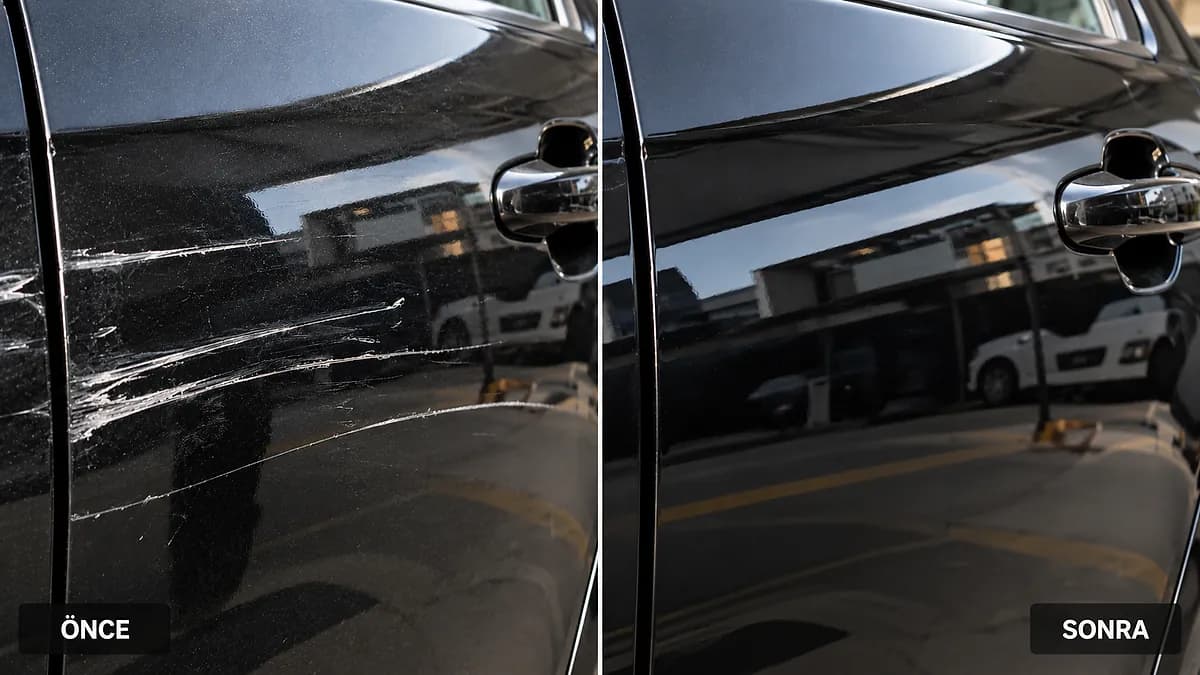
Vehicle scratches are among the most common automotive paint defects, but not every scratch has the same depth.
Some scratches affect only the clear coat and can be corrected with compound or polish. Others penetrate the color coat and require touch-up paint. Deeper damage may reach the primer or bare metal and require professional refinishing.
The first step in choosing the correct scratch repair product is therefore identifying the depth of the damage.
What Causes Car Scratches?
Common causes include:
Automatic car washes
Dirty wash mitts
Dry wiping
Tree branches
Parking contact
Door impacts
Road debris
Hard objects
Incorrect washing methods
Understanding Automotive Paint Layers
A typical automotive paint system includes:
Metal or plastic substrate
Primer
Color coat
Clear coat
The correct repair method depends on which layer has been damaged.
What Is a Light Surface Scratch?
Light scratches normally affect only the clear coat.
Examples include:
Wash scratches
Swirl marks
Fine surface lines
Light scuffs
These scratches may often be corrected with polish or a swirl remover.
How Can You Identify a Clear-Coat Scratch?
A clear-coat scratch may:
Appear as a fine white line
Not expose the color layer
Feel relatively smooth
Become less visible when wet
These defects are often suitable for polishing.
Can Compound Remove Surface Scratches?
Yes.
When a scratch is limited to the clear coat, a suitable compound or polish can level the surrounding surface and reduce the visible defect.
When Should a Swirl Remover Be Used?
Swirl remover is useful for:
Fine scratches
Swirl marks
Light holograms
Polishing haze
Minor dullness
It is generally less aggressive than heavy cutting compound.
What Is a Medium-Depth Scratch?
A medium scratch may penetrate deeper into the clear coat or reach the color layer.
Common signs include:
More visible line
Fingernail catches slightly
Different color visible in the scratch
Compound does not fully remove it
Touch-up paint may be required if the color coat is damaged.
What Does It Mean If a Scratch Catches Your Fingernail?
A scratch that catches a fingernail may be deeper than a light clear-coat defect.
However, this is only a rough test.
The most important question is whether the color coat, primer or substrate is exposed.
Compound or Touch-Up Paint?
As a general guide:
Clear-coat defect → compound or polish
Missing color coat → touch-up paint
Large paint damage → local refinishing
What Is a Deep Scratch?
A deep scratch may penetrate:
Clear coat
Color coat
Primer
Bare metal
Deep scratches cannot be repaired with polish alone.
How Do You Repair a Scratch That Reaches Bare Metal?
The process may include:
Cleaning
Rust inspection
Sanding when required
Primer
Color-matched paint
Clear coat when required
Large defects should be repaired professionally.
How Can You Determine Scratch Depth?
Several simple methods can help.
Inspect Under Strong Light
LED lighting can make the defect easier to see.
Fingernail Test
Check whether the nail catches on the scratch.
Wet Test
If the scratch becomes much less visible when wet, it may be limited to the clear coat.
Color Inspection
White, grey or metallic material visible inside the scratch may indicate deeper damage.
Why Does a Scratch Disappear When Wet?
Water temporarily fills the defect and changes how light reflects from the surface.
This can indicate that the scratch is mainly within the clear coat.
How Does Compound Remove Scratches?
Compound does not simply fill the scratch.
It removes a microscopic amount of clear coat around the defect and levels the surface.
This is why polishing must be controlled.
What Is Scratch-Removing Compound?
Scratch remover or cutting compound is an abrasive automotive product used to reduce paint defects.
Products may be classified as:
Heavy cut
Medium cut
Fine cut
The correct grade depends on the defect.
Should Heavy Compound Be Used on Every Scratch?
No.
Using unnecessarily aggressive compound removes more clear coat than required.
The least aggressive effective product should be used first.
Can a Polishing Machine Remove Scratches?
Yes, when paired with the correct compound and pad.
The final result depends on:
Compound
Pad
Machine type
Speed
Pressure
Paint hardness
Can Scratches Be Removed by Hand?
Light defects may be improved by hand.
Machine polishing provides more consistent correction for larger areas.
How Are Door Scratches Repaired?
Door scratches can result from:
Parking contact
Walls
Other vehicle doors
Bags or objects
Light scratches may be polished.
Paint loss may require touch-up paint.
Larger damage may require local refinishing.
How Are Bumper Scratches Repaired?
If only the clear coat is damaged, polishing may be sufficient.
If paint has been removed, the repair may require:
Plastic surface preparation
Primer
Color coat
Clear coat
Removing Scratches from Black Cars
Black paint shows swirls and fine scratches very clearly.
Finishing polish and swirl removers are especially important.
Removing Scratches from White Cars
Fine scratches may be less visible on white paint, but deeper defects can expose darker primer underneath.
Removing Scratches from Metallic Paint
Polishing works on the clear coat above metallic paint.
If the metallic color coat is damaged, polishing cannot replace missing pigment.
Touch-up paint or refinishing is required.
Removing Scratches from Pearl Paint
Pearl paint systems may use several layers.
Surface scratches can be polished, but deeper color damage may require professional color matching.
How Are Car-Wash Scratches Removed?
Car-wash scratches are often swirl marks caused by:
Brushes
Dirty sponges
Rough towels
Dry wiping
These defects can often be corrected with polishing.
Can Compound Remove Key Scratches?
Key scratches are frequently deep.
If the scratch reaches the color coat, compound will not fully repair it.
Touch-up paint or refinishing may be necessary.
Are Stone Chips the Same as Scratches?
Stone chips are point-shaped paint defects caused by road debris.
They commonly occur on:
Hood
Front bumper
Front fenders
Touch-up paint is generally more appropriate than polishing.
What Products Are Used for Car Scratch Repair?
Common products include:
Heavy cutting compound
Medium compound
Fine polish
Swirl remover
Finishing polish
Touch-up paint
Touch-up pen
Automotive spray paint
Primer
Clear coat
Polishing pads
Microfiber towels
Is Sanding Used for Scratch Removal?
Professional paint correction may use very fine wet sanding for some deep clear-coat defects.
However, sanding is risky.
Incorrect sanding can remove the clear coat completely and damage the color layer.
Can 2000 or 3000 Grit Sandpaper Remove Scratches?
Fine abrasives may be used in professional refinishing, but polishing is required afterward.
Paint thickness should be considered before sanding.
Can Touch-Up Paint Cover a Scratch?
Yes, when paint is missing.
Touch-up paint can:
Restore missing color
Reduce the visibility of damage
Protect exposed areas
It may not create the same perfectly level finish as professional refinishing.
Can a Touch-Up Pen Be Used for Scratches?
Yes.
It is useful for:
Small scratches
Stone chips
Door-edge defects
The correct vehicle paint code should be used.
What Is Local Paint Repair?
Local refinishing repairs only the damaged area instead of painting the entire panel.
It may be suitable for larger scratches on:
Doors
Fenders
Bumpers
When Is Full Panel Painting Necessary?
Full panel refinishing may be needed when:
Damage is extensive
Paint loss covers a large area
Several defects exist
Dents are present
Local blending is not practical
Can Paint Be Applied Directly Over a Scratch?
The surface should first be prepared.
Cleaning, degreasing, rust treatment, sanding and primer may be necessary.
Should the Vehicle Be Washed Before Scratch Repair?
Yes.
Dirt can hide defects and can create additional scratches during polishing.
Should Wax Be Applied After Scratch Removal?
Yes.
After polishing, a wax, sealant or paint protection product can be applied.
Does Scratch Removal Thin the Clear Coat?
Abrasive polishing removes a small amount of clear coat.
Repeated aggressive polishing should therefore be avoided.
How Many Times Can a Car Be Polished?
There is no fixed number.
It depends on:
Clear-coat thickness
Previous polishing
Product aggressiveness
Repair history
Professional technicians may use a paint thickness gauge.
Can Scratches Come Back?
Yes.
If poor washing habits continue, new swirl marks and scratches can develop.
How Can Car Scratches Be Prevented?
Good practices include:
Avoid automatic brush washes
Use quality wash mitts
Use clean microfiber towels
Never wipe a dusty car dry
Remove bird droppings quickly
Use suitable paint protection
Does Paint Protection Prevent Scratches?
Wax and sealants can offer light surface protection but do not make paint scratch-proof.
Ceramic coatings also do not prevent all physical scratches.
What Should You Consider When Choosing a Scratch Remover?
Consider:
Scratch depth
Paint condition
Clear-coat thickness
Hand or machine application
Cutting power
Pad type
User experience
Why Start with the Least Aggressive Product?
The goal is to correct the defect while removing as little clear coat as possible.
Start with a fine polish and move to stronger correction only when necessary.
Why Is Paint Thickness Important?
A vehicle may have been polished or refinished previously.
If the clear coat is already thin, aggressive correction can be risky.
Frequently Asked Questions
How do you remove car scratches?
The correct method depends on depth. Light scratches may use polish, deeper damage may require touch-up paint or refinishing.
Does compound remove car scratches?
It can reduce clear-coat scratches but cannot replace missing paint.
Can a scratch that catches a fingernail be polished out?
It may be too deep for complete removal. Paint repair may be necessary.
How do you repair a deep scratch?
Primer, touch-up paint or professional refinishing may be required.
Does swirl remover remove scratches?
It can reduce fine scratches, swirls and holograms.
Can touch-up paint repair scratches?
Yes, especially when the color coat is missing.
What does a white scratch mean?
It may be light reflection from the clear coat or exposed primer.
What if the scratch disappears when wet?
It may be limited to the clear coat and suitable for polishing.
Can bumper scratches be polished?
Yes, if only the clear coat is damaged.
Why are scratches more visible on black cars?
Dark paint reflects light strongly, making fine defects easier to see.
Conclusion
The correct way to remove a car scratch depends on its depth.
As a general guide:
Light clear-coat scratches: fine polish or swirl remover
Moderate scratches: compound and polishing
Small areas of missing paint: touch-up paint
Larger damage: local refinishing
Scratches reaching bare metal: primer, paint and professional repair
The objective should always be to correct the defect while preserving as much clear coat as possible.
Using the correct product, pad and application technique can significantly improve many common automotive paint scratches.